
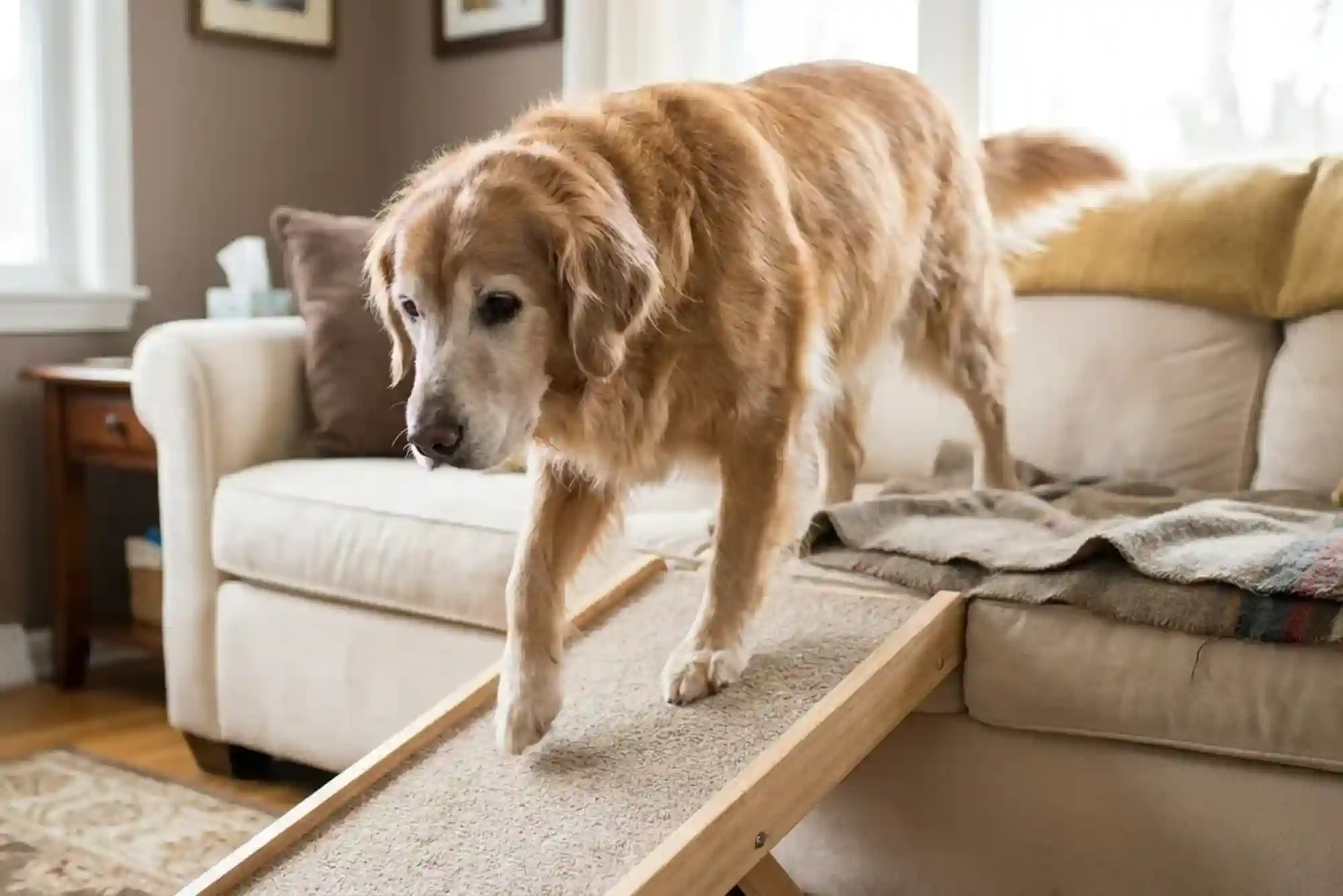
Introduction
Senior dogs often need extra support when climbing onto beds, sofas, and vehicles. What once seemed like an easy jump can become uncomfortable with age. Joint stiffness, reduced muscle strength, arthritis, and balance changes can make these movements harder. This is where the Best Orthopedic Dog Ramps for Beds and SUVs: Preventing Joint Strain in Senior Dogs can make everyday life easier.
A properly designed dog ramp provides a gradual route between the floor and a raised surface. Instead of jumping, your dog can walk up or down with more controlled movement. However, choosing the right ramp requires more than checking its weight rating. Length, incline, traction, width, stability, and portability all matter.
For senior dogs, comfort and confidence should remain the priority. A ramp is also an accessibility tool rather than a treatment for joint disease. If your dog’s mobility changes suddenly, veterinary evaluation should come before relying on mobility equipment.
Why Senior Dogs May Struggle With Jumping
Aging naturally changes how dogs move. Older dogs may develop reduced flexibility, weaker muscles, slower reflexes, or joint discomfort. These changes can make jumping onto a high bed or into an SUV more demanding.
Repeated jumping can also create a challenging landing. The dog must push upward, control its body in the air, and absorb the landing through its limbs. A senior dog with painful or stiff joints may hesitate before attempting the movement.
You might notice your dog standing beside the bed rather than jumping. Your dog may also place the front paws on the furniture and wait for assistance. These small changes can indicate that the previous access method is becoming difficult.


A ramp changes that movement pattern. Instead of making a single large jump, your dog can travel gradually between different heights. That can make everyday access more manageable.
How Orthopedic Dog Ramps Help Senior Dogs
The primary purpose of an orthopedic-style dog ramp is to provide easier access while reducing the need for jumping. The ramp creates a continuous walking surface rather than requiring your dog to clear a vertical gap.
This can be particularly useful for dogs that have difficulty with furniture or vehicle access. Cornell guidance on home modifications for dogs with osteoarthritis includes ramps for access to beds, couches, and cars.
However, not every ramp provides the same level of support. A short ramp can create a steep incline. A narrow ramp can make an unsteady dog feel insecure. A smooth surface can become dangerous if your dog’s paws slide.
Therefore, the best orthopedic dog ramps for beds and SUVs should match your dog’s physical abilities and the height being reached.
Choosing the Best Orthopedic Dog Ramps for Beds and SUVs
The first factor to consider is ramp length. A longer ramp generally creates a gentler incline when the height remains the same. This is especially important for senior dogs that struggle with steep climbs.
There is no single scientifically established ramp angle that is safe for every dog. Individual strength, balance, coordination, pain, and confidence all affect ramp use. Therefore, a longer ramp should be considered when your available space allows it.
Height is equally important. For a bed, measure from the floor to the top of the mattress. Include any mattress topper because it increases the actual climbing height.
For an SUV, measure from the ground to the vehicle’s loading point. The height can vary significantly between vehicles. A lifted SUV may require considerably more ramp length than a lower crossover.
The ramp’s width should also suit your dog’s body size. Senior dogs sometimes have less precise footing than younger dogs. A wider walking surface gives them more room to correct their position.
Traction is another essential feature. Your dog should be able to place each paw securely without sliding. Carpet, textured rubber, and other non-slip surfaces can provide additional confidence.
Stability matters just as much. A ramp that shifts, bends, or wobbles can make a dog afraid to use it. Vehicle ramps should also have a secure connection or support system that prevents unexpected movement during loading.
Best Dog Ramps for Beds
A bed ramp needs to work within the available bedroom space. This can be challenging because a comfortable incline often requires a longer ramp.
A short indoor ramp may fit conveniently beside the bed. However, its increased incline may make climbing uncomfortable for a dog with significant mobility limitations.
A longer ramp usually provides a more gradual path. It can therefore be useful for larger senior dogs or dogs that are hesitant about climbing.
Indoor ramps should also have a surface that works well on flooring. Hardwood, tile, and laminate floors can be slippery around the base. A stable bottom or anti-slip feet can prevent unwanted movement.
The top transition deserves attention too. Your dog should be able to move smoothly from the ramp onto the mattress. A large gap or unstable landing can create hesitation.
For a dog that sleeps with you, the ramp should remain accessible throughout the night. Otherwise, your dog may still attempt to jump down when you are asleep.
Best Dog Ramps for SUVs
SUV access presents a different challenge because the loading height can be substantial. A ramp must bridge that height while remaining manageable for the dog.
A telescoping or folding design can be practical for vehicle use. It allows the ramp to be stored in the vehicle when it is not needed.
However, portability should never replace stability. The ramp needs to remain firmly positioned during use. Some vehicle ramps include attachment straps that help prevent movement.
The ramp should also be long enough for the vehicle’s height. A very short ramp can create a steep climb. That may cause a senior dog to hesitate or scramble for traction.
Before purchasing, measure the SUV carefully. Check the loading height, available ground space, and the location where the ramp will rest.
Also consider where you normally park. A sloped driveway can change the effective height and ramp position. Testing the ramp on level ground first can make the introduction easier.
Dog Ramps Versus Dog Stairs for Senior Dogs
Many owners wonder whether ramps or stairs are better for older dogs. The answer depends on the individual dog and the situation.
Ramps replace individual steps with a continuous incline. Stairs require repeated stepping and balancing. Therefore, a ramp may feel easier for a dog that struggles with lifting its paws or controlling its descent.
However, ramps are not automatically better for every senior dog. Some older dogs remain confident on low, stable steps. Others may dislike walking on a long inclined surface.
Available space also matters. A full-length bed ramp may require considerably more floor space than compact stairs.
For SUVs, ramps are often practical because they provide a continuous route into a relatively high vehicle. For beds, the choice can depend heavily on room layout and the dog’s movement pattern.
The most useful option is the one your dog can use calmly and consistently.
How to Train a Senior Dog to Use a Ramp
Even a well-designed ramp may be ignored initially. Dogs do not automatically understand that a new surface is meant to help them.
Start by placing the ramp somewhere familiar. Allow your dog to investigate it without pressure. Reward calm interaction with treats and praise.
Next, encourage your dog to walk across the ramp while it is positioned at a very low incline. Keep the experience positive and brief.
Once your dog becomes comfortable, gradually increase the height. Avoid pulling the dog up the ramp with a leash because forced movement can increase fear.
Watch the dog’s body language. Hesitation, scrambling, freezing, repeated attempts to turn around, or obvious discomfort means the setup should be reconsidered.
Training should remain patient. Confidence is especially important for senior dogs because one frightening slip can make them reluctant to use the ramp again.
What Makes a Ramp Orthopedic-Friendly?
The word “orthopedic” can sound highly technical, but the practical concept is straightforward. An orthopedic-friendly ramp should make movement easier rather than adding another physical challenge.
A gentle incline is important because it reduces the need for a steep climb. A secure surface helps prevent slipping. Adequate width allows controlled movement. Strong construction prevents instability.
The ramp should also match the dog’s weight and size. Do not choose a product based only on the advertised maximum weight. A large dog may require additional width and structural support even when its weight falls within the manufacturer’s rating.
Comfort is another consideration. A harsh, slippery surface can discourage use. A textured surface can provide better paw contact and confidence.
Ultimately, the best orthopedic dog ramps for beds and SUVs are those that allow your dog to move naturally, steadily, and without unnecessary jumping.
Common Mistakes When Buying a Senior Dog Ramp
One common mistake is choosing a ramp that is too short. Short ramps are easier to store, but they can create a sharper incline.
Another mistake is focusing only on weight capacity. A ramp can support your dog without being wide or stable enough for comfortable use.
Ignoring traction is another problem. Senior dogs may already have reduced balance. A slippery surface can make the ramp frightening or unsafe.
Owners also sometimes forget about the landing area. Your dog needs enough space to step safely onto the bed or into the SUV.
Finally, avoid assuming that a ramp solves every mobility problem. New weakness, persistent limping, repeated falling, dragging paws, or sudden difficulty walking deserves veterinary attention.
How to Find the Right Ramp for Your Dog
Start with your dog’s size, age, mobility, and confidence. Then measure the height of the surface the dog needs to reach.
Next, consider how much floor space you have available. Choose the longest practical ramp if a gentler incline is needed.
For indoor use, prioritize stability, traction, and a suitable height. For SUVs, focus on length, portability, vehicle attachment, and secure positioning.
It is also useful to observe how your dog currently moves. If your dog struggles more with stepping than walking, a ramp may provide a useful alternative.
However, every dog responds differently. A ramp that works beautifully for one senior dog may not suit another.
Frequently Asked Questions
Are ramps better than stairs for senior dogs?
Ramps can be easier for many senior dogs because they replace repeated steps with a continuous incline. However, there is no universal choice for every dog.
The right option depends on your dog’s balance, strength, mobility, confidence, available space, and the height involved.
What angle should a dog ramp be?
There is no universally validated angle that applies to every dog. A longer ramp creates a gentler incline for the same height.
Senior dogs may benefit from a gradual slope that they can comfortably walk in both directions. Traction and stability are also important.
How long should a dog ramp be for a bed?
The correct length depends on the bed height and your dog’s mobility. A taller bed generally requires a longer ramp to create a manageable incline.
Measure from the floor to the mattress surface. Then choose the longest practical ramp that fits your room.
Are dog ramps good for dogs with arthritis?
Ramps can be useful environmental modifications for dogs with mobility difficulties. They can reduce the need for jumping onto beds, couches, and vehicles.
However, a ramp does not treat arthritis itself. A veterinarian should evaluate persistent or worsening mobility problems.
How do I know if my dog’s ramp is too steep?
Watch how your dog moves on it. Scrambling, hesitation, slipping, stopping repeatedly, or refusing to climb can indicate that the setup is unsuitable.
You can also reduce the incline by using a longer ramp. There is no single angle that defines a safe ramp for every dog.
Can a dog ramp prevent joint strain?
A ramp can reduce the need for jumping and repeated step climbing. This may make access to elevated surfaces easier for some senior dogs.
It should be viewed as an accessibility aid rather than a medical treatment. Your dog’s overall joint health still requires appropriate veterinary care.
Conclusion
Finding the Best Orthopedic Dog Ramps for Beds and SUVs: Preventing Joint Strain in Senior Dogs starts with understanding your dog’s individual needs. The right ramp should provide a gradual incline, reliable traction, strong stability, and enough width for confident movement.