Introduction
Learning how to introduce two adult dogs on neutral territory without fighting requires patience, preparation, and careful observation. Adult dogs may have established routines, personal boundaries, and different social experiences. Therefore, putting two unfamiliar dogs together suddenly can create unnecessary tension.
A neutral location gives both dogs a better chance to interact without feeling that they must protect their home or belongings. However, the location alone does not guarantee a peaceful meeting. Your handling, distance, timing, and understanding of canine body language also matter.
The goal should not be immediate friendship. Instead, focus on creating a calm first experience. When both dogs learn that being around each other predicts safe and positive experiences, their relationship can develop naturally.
Why Neutral Territory Matters When Introducing Dogs
Dogs can behave differently when another animal enters their familiar environment. A home contains valuable resources, including food, toys, resting areas, people, and sleeping spaces. Some dogs may become protective of these resources when an unfamiliar dog enters.
A neutral location reduces some of these territorial pressures. Neither dog has established ownership of the space, so both can explore it without immediately defending familiar surroundings.
When learning how to introduce two adult dogs on neutral territory without fighting, choose a quiet outdoor location. A calm sidewalk, open park area, or spacious walking route can work well.


Avoid crowded dog parks for the first meeting. Too many unfamiliar dogs can increase excitement and make body-language signals difficult to interpret. A quieter environment allows both dogs to focus on each other.
Prepare Before the First Meeting
Preparation should begin before the dogs see each other. Both handlers should use secure, comfortable leashes and properly fitted collars or harnesses. Avoid equipment that restricts normal movement or creates unnecessary discomfort.
It is also useful to arrange the meeting when both dogs are relatively calm. A dog that has just experienced intense exercise may still be highly aroused. Likewise, meeting when a dog is extremely hungry, tired, or stressed may make communication harder.
Each handler should know the dog’s normal behavior. Understanding how your dog reacts to unfamiliar dogs can help you recognize changes before tension becomes a problem.
For safety, keep the first meeting controlled and give both dogs enough space. The dogs should never be forced into close contact simply because they are meeting for the first time.
Start With Distance
One of the most important parts of learning how to introduce two adult dogs on neutral territory without fighting is controlling the initial distance.
Begin with the dogs far enough apart that they can notice each other without becoming overwhelmed. This distance varies between individual dogs. One dog may remain relaxed from several feet away, while another may need considerably more space.
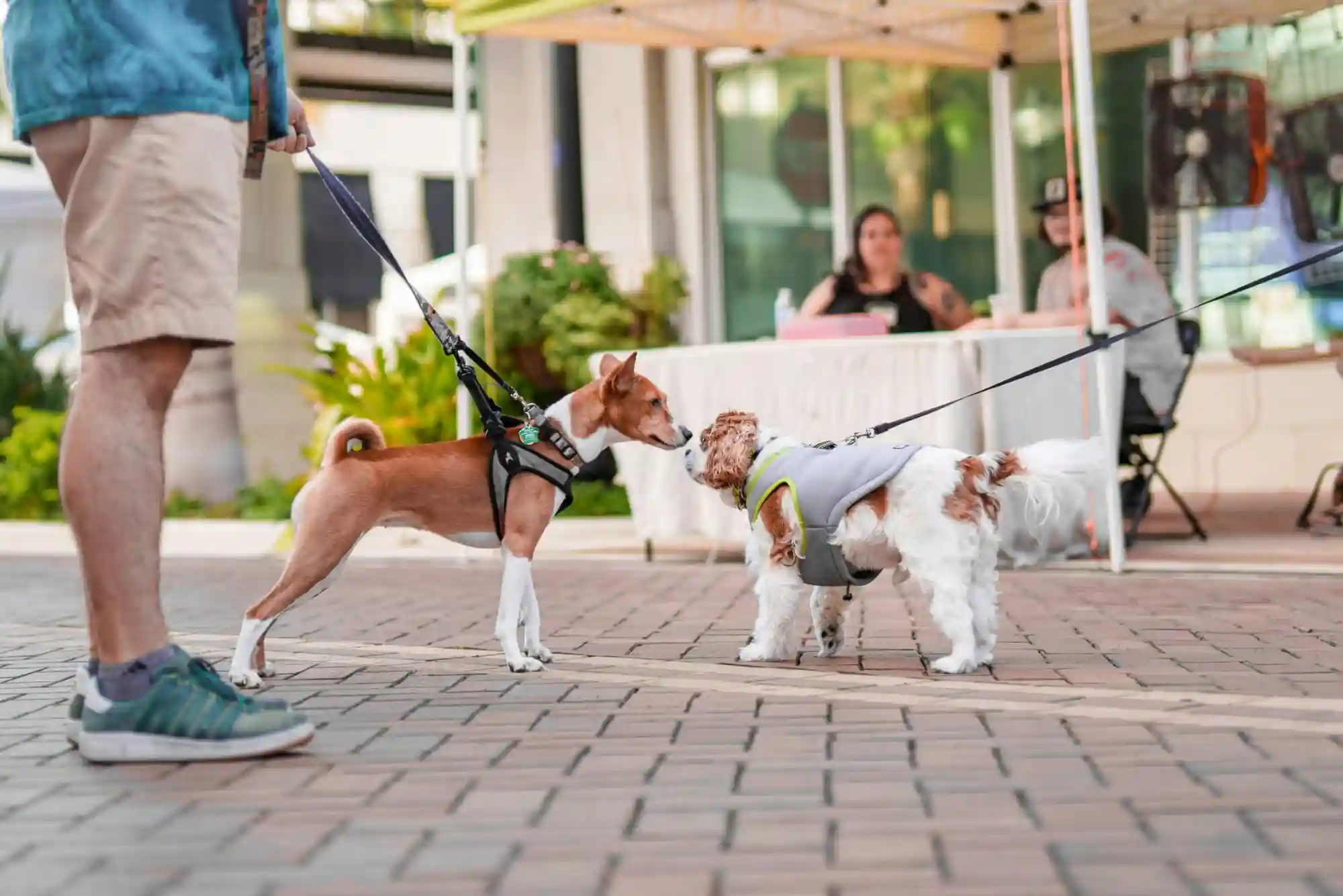
Walk the dogs in the same general direction instead of bringing them directly face-to-face. Parallel walking reduces social pressure and gives each dog something else to focus on.
Reward calm behavior with quiet praise or small treats. If a dog looks at the other dog and then relaxes, that is useful information. It shows that the dog can process the situation without immediately reacting.
Gradually reduce the distance when both dogs remain comfortable. There is no need to rush this process.
Watch Their Body Language Carefully
Dogs communicate long before barking or fighting occurs. Learning their body language is essential when introducing unfamiliar adult dogs.
Relaxed dogs generally have loose body movements. Their posture may appear soft, and they may naturally look away or sniff the environment. These behaviors can indicate that the situation is manageable.
On the other hand, stiff posture deserves attention. A dog that suddenly becomes rigid, freezes, stares intensely, raises its hackles, or repeatedly growls may be uncomfortable.
Other warning signs can include lip lifting, repeated barking, lunging, snapping, or attempting to escape. These signals should not be ignored.
If either dog becomes tense, increase the distance calmly. Do not punish the warning signal. A growl can provide valuable information that the dog needs more space.
Allow a Controlled Greeting
Once both dogs appear relaxed, you can allow a brief greeting. Avoid pulling them directly together or holding their faces toward each other.
Let them approach in a curved path whenever possible. Direct frontal approaches can create more social pressure than relaxed, curved movement.
Keep the initial greeting short. A few seconds may be enough. Then calmly separate the dogs and continue walking.
This pattern allows the dogs to process the interaction without becoming overwhelmed. Several short, successful interactions are generally more useful than one prolonged encounter.
When learning how to introduce two adult dogs on neutral territory without fighting, remember that ending on a calm moment is valuable. The first meeting does not need to prove that the dogs can play together.
What If One Dog Growls?
A growl does not automatically mean that a fight will happen. It usually means the dog is communicating discomfort, uncertainty, or a desire for more space.
The appropriate response is to create distance rather than punish the dog. Punishment may suppress the warning without addressing the underlying discomfort.
Once the dogs are farther apart, give them time to relax. You can resume parallel walking if both dogs return to calm behavior.
However, repeated lunging, snapping, or attempts to attack require greater caution. In these situations, professional help from a qualified reward-based trainer or veterinary behavior professional may be appropriate.
Keep the First Meeting Short
Long introductions can become overwhelming, particularly for dogs that are nervous or inexperienced around other dogs.
A successful first meeting might involve walking together, brief sniffing, and several calm separations. The dogs do not need to play together during their first encounter.
If both dogs remain relaxed, the next meeting can gradually become longer. Progress should be based on their behavior rather than a fixed schedule.
Some adult dogs become comfortable with each other quickly. Others need several carefully managed meetings. Both situations can be normal.
Introduce Them at Home Carefully
A successful neutral-territory meeting does not mean the dogs should immediately share every resource at home.
After the outdoor meeting, continue using management indoors. Keep food bowls, high-value chews, and favorite toys separate at first.
Give each dog its own resting area. This provides opportunities to retreat and relax without competition.
Supervise interactions during the early stages. If either dog becomes tense around a particular resource, calmly separate them and reconsider how that resource is being managed.
Gradual exposure can help prevent unnecessary conflict while the dogs learn each other’s routines.
Common Mistakes to Avoid
One common mistake is forcing dogs to interact too quickly. Owners sometimes believe that dogs must sniff each other immediately. However, allowing space can make the meeting significantly easier.
Another mistake is interpreting every tail wag as friendliness. Tail movement needs context. A rapidly moving tail combined with a stiff body can indicate high arousal rather than relaxation.
It is also unhelpful to punish growling. Instead, treat it as communication and identify what caused the discomfort.
Finally, avoid assuming that dogs must become best friends. A peaceful relationship is already a successful outcome. Some dogs prefer calm coexistence over constant interaction.
How to Introduce Two Adult Dogs on Neutral Territory Without Fighting Successfully
The safest approach combines distance, controlled movement, careful observation, and gradual interaction. Start with parallel walking and allow the dogs to become aware of each other without pressure.
As they relax, gradually decrease the distance. Allow brief greetings when their body language remains comfortable. Then separate them before excitement becomes excessive.
Positive reinforcement can strengthen calm responses. For example, rewarding a dog for calmly looking at another dog can help create a positive association.
Most importantly, allow the dogs to communicate. Good introductions are not about controlling every movement. They are about creating conditions where both dogs can feel secure.
Frequently Asked Questions
How long does it take for two adult dogs to get along?
There is no universal timeline for adult dogs to become comfortable together. Some dogs adjust after several meetings, while others need weeks or longer.
Their history, temperament, age, social experience, and environment can all influence the process. Focus on calm progress rather than a specific deadline.
Should dogs meet on neutral territory?
Yes, neutral territory can reduce territorial pressure during an initial introduction. A quiet outdoor location allows both dogs to investigate their surroundings without one dog immediately defending its home.
However, neutral territory is only one part of a successful introduction. Proper distance and supervision remain important.
Should I let two dogs fight it out?
No. Allowing dogs to fight can cause injuries and may create stronger negative associations between them.
Instead, prevent escalation whenever possible. Increase distance when you notice signs of discomfort or rising arousal.
How do you introduce two dogs when one is aggressive?
Introductions involving significant aggression require additional caution. Avoid close contact until you understand the triggers and can safely manage both dogs.
A qualified veterinary behavior professional or experienced reward-based behavior professional can help develop an individualized introduction plan.
How do I know if two dogs will get along?
Relaxed body language, loose movement, appropriate disengagement, and the ability to remain calm near each other are encouraging signs.
However, no single behavior guarantees compatibility. Continue observing both dogs during repeated interactions and manage resources carefully.
Conclusion
Understanding how to introduce two adult dogs on neutral territory without fighting can make the experience safer and less stressful for everyone involved. The key is to avoid rushing the relationship.